The Premise & Reading Vibe
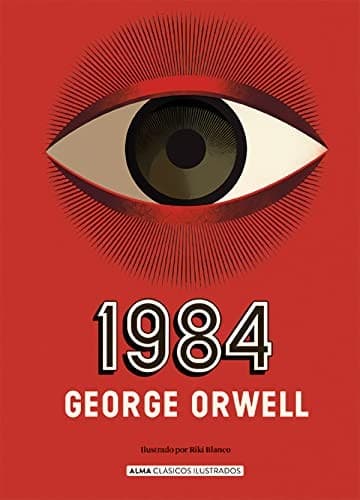
George Orwell’s *1984* remains the definitive benchmark for political dystopian fiction. Set in the bleak, soot-stained metropolis of Airstrip One (London) under the omnipresent gaze of Big Brother, the novel is an unsettling exploration of totalitarian control, psychological surveillance, and the systematic obliteration of truth.
The Narrative & Worldbuilding
We follow Winston Smith, a mid-level bureaucrat at the Ministry of Truth whose daily job is rewriting historical records to match the Party's ever-shifting propaganda. Winston's internal rebellion begins with a forbidden diary and deepens when he enters a clandestine romance with Julia in a rented room above an antique shop.
Orwell’s worldbuilding is legendary because of its psychological precision. Concepts like *Newspeak* (narrowing language to eliminate rebellious thought), *Doublethink* (holding two contradictory beliefs simultaneously), and the *Memory Hole* feel chillingly plausible rather than fantastical.
Character Dynamics & Emotional Stakes
Winston is not a grand superhero; he is a frail, coughing, intellectually curious man desperate for an objective reality. His dynamic with Julia provides the story’s fragile human heartbeat—contrasting his philosophical dread with her fierce, pragmatic appetite for living. The third act, anchored by the cold intellectual cruelty of O'Brien and the horrors of Room 101, delivers an uncompromising psychological interrogation.
Key Highlights & Tropes
Psychological Dread: The constant paranoia that every telescreen, child informant, and facial micro-expression is being monitored.
Linguistic Control: The concept of Newspeak demonstrates how controlling vocabulary directly shapes the boundaries of thought.
Forbidden Romance: Winston and Julia’s secret sanctuary represents the ultimate defiance against an emotionally sterilized regime.
Uncompromising Climax: An ending that resists easy Hollywood tropes, leaving an indelible philosophical mark.
The Critic's Note (Pacing & Context)
Part I establishes the atmospheric dread with meticulous pacing, while Part II accelerates the romantic tension. Readers should note that Emmanuel Goldstein’s in-world political treatise in Part II slows down narrative momentum for pure political theory, but it pays off with the devastating momentum of Part III.
For Fans Of
Essential reading for fans of Margaret Atwood's *The Handmaid's Tale*, Ray Bradbury's *Fahrenheit 451*, and Aldous Huxley's *Brave New World*.