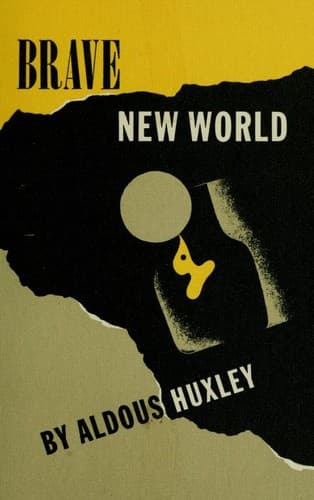
The Premise & Reading Vibe
Aldous Huxley’s *Brave New World* presents a terrifyingly seductive dystopia not of violent oppression, but of engineered pleasure, genetic predestination, and ubiquitous pharmaceutical numbing. It asks whether happiness without freedom, art, or suffering is worth living.
The Narrative & The World State
In the year AF 632 (After Ford), humans are decanted in test-tube hatcheries, conditioned into strict castes (Alphas to Epsilons), and kept in constant compliance through the mood-altering drug *soma* and mandatory consumer hedonism.
The discontented Alpha Bernard Marx visits a New Mexico Savage Reservation and brings back John 'the Savage', a young man raised on Shakespeare and indigenous traditions. John's collision with the sterilized, promiscuous, and emotionally hollow World State culminates in a philosophical duel with World Controller Mustapha Mond.
The Seduction of Comfort vs. Human Dignity
Huxley’s nightmare is uniquely unnerving because the citizens love their servitude. In John’s impassioned debate with Mond, he famously claims 'the right to be unhappy'—demanding poetry, danger, freedom, goodness, and sin over sterile tranquilizers.
Key Highlights & Tropes
Biotechnological Engineering: Bokanovsky's process and sleep-teaching (Hypnopaedia) controlling human thought before birth.
The Soma Pacifier: An uncanny precursor to modern antidepressant culture and screen addiction.
John the Savage's Tragedy: An outsider caught between two worlds, unable to find peace in either.
Philosophical Duel: The Mustapha Mond chapters offer one of the most articulate defenses of benevolent totalitarianism ever penned.
The Critic's Note
The first few chapters read almost like an academic tour of the London Hatchery, but once Bernard and Lenina venture to the Reservation in Chapter 6, the narrative accelerates into a gripping tragedy.
For Fans Of
Essential for fans of George Orwell’s *1984*, Kazuo Ishiguro’s *Never Let Me Go*, and Dave Eggers’ *The Circle*.