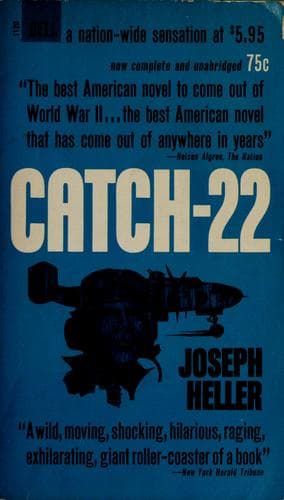
The Premise & Reading Vibe
Joseph Heller’s *Catch-22* is a darkly comic, razor-sharp anti-war classic that invented an immortal phrase for bureaucratic absurdity. Set on a Mediterranean island bombing squadron during World War II, it turns military logic inside out with surreal hilarity and sudden, gut-wrenching tragedy.
The Narrative & The Bureaucratic Trap
Captain John Yossarian is a B-25 bombardier whose primary goal is simple: staying alive while thousands of people he's never met try to kill him. Every time Yossarian nears the required number of combat missions to go home, his ambitious commander, Colonel Cathcart, raises the quota.
Yossarian tries to get grounded on grounds of insanity, only to be confronted by Doc Daneeka with the paradoxical rule of Catch-22: a man who wants to fly combat missions is crazy and can be grounded, but asking to be grounded proves he is sane and therefore fit to fly.
From Absurdist Farce to Unflinching Horror
Heller’s non-linear narrative oscillates between chaotic laughter—such as Milo Minderbinder running a black-market syndicate that bombs his own base for profit—and visceral trauma. The recurring memory of the young radio-gunner Snowden bleeding out in Yossarian's aircraft grounds the comedy in the cold, raw reality of human mortality.
Key Highlights & Tropes
Circular Logic & Wordplay: Brilliant dialogue that exposes institutional absurdity and self-serving leadership.
An Unforgettable Ensemble: Major Major Major Major, Orr and his crabapples, the frustrated Chaplain, and Chief White Halfoat.
Anti-War Satire: A fearless critique of war profiteering and military careerism.
Snowden’s Secret: A poignant philosophical core revealing that man is matter, vulnerable and mortal.
The Critic's Note
The non-chronological timeline and rapid-fire absurdity in the first hundred pages can feel disorienting, but once the mosaic clicks into place, it delivers an unforgettable emotional punch.
For Fans Of
Essential for readers of Kurt Vonnegut’s *Slaughterhouse-Five*, Thomas Pynchon’s *Gravity's Rainbow*, and Tim O’Brien’s *The Things They Carried*.