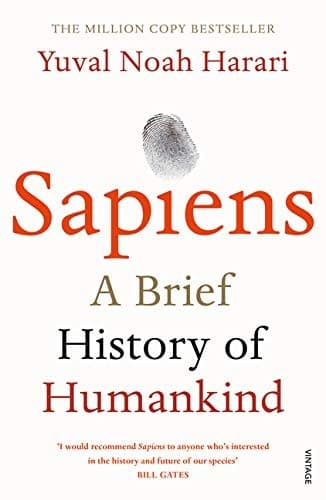
The Core Concept & Reading Vibe
Yuval Noah Harari’s *Sapiens* is a groundbreaking, panoramic masterwork that spans 70,000 years of human evolution. Sweeping, thought-provoking, and accessible, it explores how an insignificant ape became the ruler of planet Earth.
The Three Major Revolutions
Harari structures human history around three transformative revolutions:
1. **The Cognitive Revolution (70,000 years ago):** The emergence of fictional language, allowing Sapiens to cooperate in large numbers based on shared myths (religions, nations, money, human rights).
2. **The Agricultural Revolution (12,000 years ago):** The domestication of wheat—which Harari provocatively argues 'domesticated us'—leading to sedentary societies, hierarchies, and malnutrition.
3. **The Scientific Revolution (500 years ago):** The willingness to admit ignorance, linking science, imperial conquest, and capitalist credit.
Shared Fictions & The Human Condition
Harari's core insight is that money, corporations (like Peugeot), and human rights exist solely in the collective imagination of humans. The book challenges modern assumptions about happiness, empire, and our biotechnology-driven future.
Core Pillars & Key Takeaways
The Power of Dual Reality: Sapiens live in both the physical world (trees, rivers) and the imagined world (laws, nations, currency).
The Wheat Trap: A fascinating critique showing how agriculture increased total food but decreased individual leisure and nutrition.
Money as Universal Trust: The greatest shared story ever invented that bridges any cultural or religious divide.
The Future of Homo Deus: Are we on the verge of upgrading ourselves into biological gods?
The Critic's Note
Harari paints with a broad historical brush, making bold generalizations that spark debate among specialized anthropologists, but his macro-lens narrative is electrifying.
For Fans Of
Essential for readers of Jared Diamond’s *Guns, Germs, and Steel*, Bill Bryson’s *A Short History of Nearly Everything*, and Yuval Noah Harari’s *Homo Deus*.