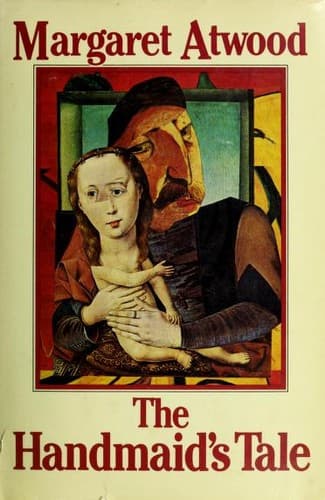
The Premise & Reading Vibe
Margaret Atwood’s *The Handmaid's Tale* is a chilling, fiercely resonant speculative masterpiece depicting a theocratic totalitarian regime that strips women of their rights, identities, and bodily autonomy in the wake of an environmental fertility crisis.
The Republic of Gilead & Offred's Resistance
In the former United States, now the Republic of Gilead, fertile women are forced into sexual servitude as 'Handmaids' to bear children for the elite ruling class. Renamed 'Offred' ('Of-Fred'), the narrator exists under strict surveillance, dressed in scarlet robes and white wings.
Through quiet observation, illicit meetings with her Commander in his study playing Scrabble, and a forbidden intimacy with the chauffeur Nick, Offred preserves her memories of her lost husband Luke, her stolen daughter, and her rebellious friend Moira.
Chilling Plausibility & Quiet Courage
Atwood famously established a strict rule: nothing in the novel was invented out of whole cloth; every law and punishment had historical precedent. Offred’s survival is not about grand revolutions, but the subversive preservation of personal identity, sensory memory, and hope: 'Nolite te bastardes carborundorum.'
Key Highlights & Tropes
Institutional Subjugation: The strict caste system of Wives, Aunts, Handmaids, Marthas, and Econowives.
The Power of Memory: Flashes of 1980s normal life (buying coffee, bank cards) contrasting with Gilead's suffocating rules.
Subtle Acts of Defiance: Illicit games of Scrabble, coded whispers in the grocery market, and underground Mayday networks.
The Historical Notes Epilogue: A clever framing device analyzing Offred's taped cassettes centuries in the future.
The Critic's Note
The novel is quiet, internal, and claustrophobic compared to the televised adaptation, focusing deeply on psychological survival.
For Fans Of
Essential for readers of George Orwell’s *1984*, Naomi Alderman’s *The Power*, and Margaret Atwood’s *The Testaments*.