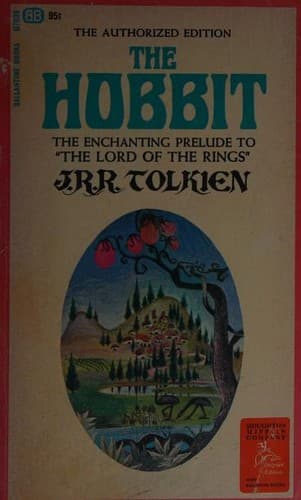
The Premise & Reading Vibe
J.R.R. Tolkien’s *The Hobbit, or There and Back Again* is the gold standard of cozy, high-stakes classic fantasy. Before the sweeping apocalyptic drama of *The Lord of the Rings*, this charming, folkloric adventure introduces Middle-earth through the quiet, comfort-loving perspective of a hobbit who unexpectedly finds heroism within himself.
The Quest & The Journey East
Bilbo Baggins of Bag End is perfectly content with tea, pipe-weed, and a quiet hearth until the wizard Gandalf and thirteen boisterous dwarves, led by Thorin Oakenshield, arrive on his doorstep. Enlisted as their official 'burglar', Bilbo is swept into an epic quest to reclaim the lost dwarven kingdom of Erebor and its vast treasure from the fearsome dragon Smaug.
The journey traverses the enchanted safety of Rivendell, the perilous depths of the Misty Mountains, the suffocating gloom of Mirkwood spider nests, and the water-bound human settlement of Lake-town.
Riddles in the Dark & The Growth of a Hero
The centerpiece of the novel—and one of fantasy's most legendary encounters—is the game of 'Riddles in the Dark' beneath the mountains, where Bilbo matches wits with the wretched creature Gollum and stumbles upon the magical One Ring.
Tolkien's genius is in Bilbo's gradual transformation: he doesn't become a mighty swordsman, but rather overcomes trolls, giant spiders, and wood-elves using quick wit, stealth, common sense, and compassion. The climax—culminating in the Battle of Five Armies and the tragic reality of 'dragon-sickness' (greed)—shows that true nobility lies not in gold, but in simple kindness.
Key Highlights & Tropes
The Reluctant Hero Arc: A protagonist who longs for his warm armchair, proving that ordinary courage matters most.
Imaginative Set-Pieces: The riddle duel with Gollum, escaping wood-elves in floating barrels, and Bilbo's verbal sparring with Smaug.
Mythic Worldbuilding: Ancient runes, elven songs, dwarven heirlooms, and talking thrushes that feel deeply rooted in Norse folklore.
Warm Narrator Voice: Tolkien’s grandfatherly, wry storytelling voice that welcomes readers of all ages.
The Critic's Note
Tolkien wrote *The Hobbit* with a lighter, more episodic children's fairy-tale tone than *The Lord of the Rings*. While the ending carries solemn weight regarding the cost of war, the earlier chapters are whimsical and storybook-paced.
For Fans Of
Beloved by readers of C.S. Lewis’ *The Chronicles of Narnia*, Ursula K. Le Guin’s *A Wizard of Earthsea*, and Patrick Rothfuss’ *The Name of the Wind*.