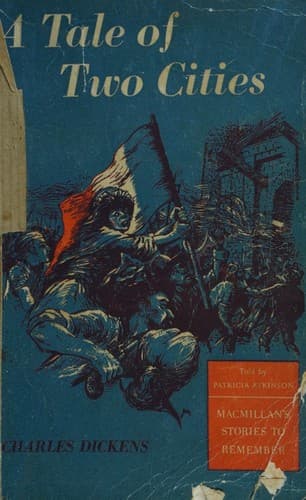
The Premise & Reading Vibe
Charles Dickens’ *A Tale of Two Cities* is an electrifying historical drama set in London and Paris during the bloody turmoil of the French Revolution. Exploring resurrection, tyranny, and ultimate sacrifice, it contains some of the most famous lines in English literature.
London, Paris & The Shadow of Madame Defarge
The narrative follows the Manette family, reunited after Dr. Alexandre Manette is released from eighteen years in the Bastille, and his devoted daughter Lucie. Lucie marries Charles Darnay, a French aristocrat who renounced his cruel family heritage to live in England.
When Darnay is drawn back to revolutionary Paris to rescue an old servant, he is arrested by the bloodthirsty Jacobin tribunal led by Madame Defarge, whose relentless knitting records the names of those condemned to the Guillotine.
Sydney Carton’s Ultimate Sacrifice
The novel’s true hero is Sydney Carton—a cynical, drunken English barrister who loves Lucie unrequitedly. In an unforgettable act of noble redemption, Carton exploits his striking physical resemblance to Darnay to take his place in the Conciergerie prison, facing the guillotine with immortal grace: 'It is a far, far better thing that I do, than I have ever done.'
Key Highlights & Tropes
The Doppelgänger Switch: The dramatic physical and moral contrast between Darnay and Carton.
Madame Defarge’s Knit List: The chilling, vengeful personification of revolutionary mob violence.
Themes of Resurrection: 'Recalled to Life'—healing from prison, trauma, and a wasted existence.
Cinematic Pacing: Faster and more plot-driven than most Dickens novels, building toward a breathless escape.
The Critic's Note
Unlike Dickens’ trademark sprawling London comedies (*Bleak House*, *David Copperfield*), this novel is tightly structured and dramatic, reading like a high-stakes historical thriller.
For Fans Of
Essential for readers of Victor Hugo’s *Les Misérables*, Alexandre Dumas’ *The Count of Monte Cristo*, and Hilary Mantel’s *A Place of Greater Safety*.