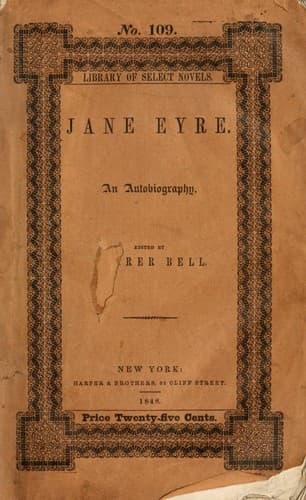
The Premise & Reading Vibe
Charlotte Brontë’s *Jane Eyre* is the foundational masterpiece of feminist Gothic romance. It follows an orphaned, penniless, yet fiercely principled governess as she asserts her self-worth, agency, and moral integrity in Victorian England.
The Narrative & The Shadow of Thornfield
Surviving the tyrannical cruelty of Gateshead Hall and the starvation conditions of Lowood School, Jane takes a position as governess to young Adèle at Thornfield Hall. There, she encounters the brooding, sardonic master Edward Rochester.
Their electric intellectual sparring evolves into intense passion, but their impending union is shattered by the shocking revelation of Rochester's locked third-story secret—his mad wife Bertha Mason.
Fierce Independence & Moral Triumph
What makes Jane timeless is her uncompromising self-respect. When Rochester begs her to become his mistress, Jane refuses to surrender her dignity: 'I am no bird; and no net ensnares me; I am a free human being with an independent will.' Her eventual reunion with a humbled, blinded Rochester at Ferndean is earned through absolute equality.
Key Highlights & Tropes
Gothic Atmosphere: Candlelit drafty corridors, eerie midnight laughter, and sudden fires at Thornfield Hall.
Brooding Byronic Hero: Rochester’s tortured past, theatrical moods, and desperate vulnerability.
Fierce Moral Agency: Jane’s refusal to sacrifice her principles for wealth or romantic surrender.
Unforgettable First-Person Voice: 'Reader, I married him' remains one of the most triumphant lines in fiction.
The Critic's Note
The middle section at Moor House with St. John Rivers slows down the romantic momentum to test Jane’s spiritual resolve, but this detour is essential to establish her financial and emotional independence before returning to Rochester.
For Fans Of
Essential for lovers of Emily Brontë’s *Wuthering Heights*, Daphne du Maurier’s *Rebecca*, and Silvia Moreno-Garcia’s *Mexican Gothic*.