The Core Concept & Reading Vibe
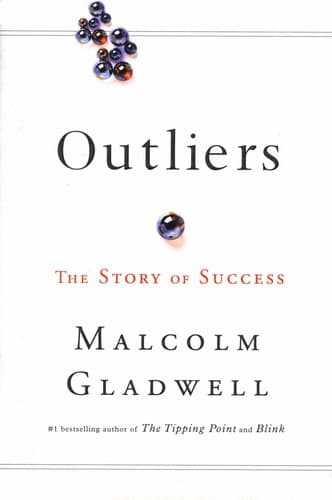
Malcolm Gladwell’s *Outliers: The Story of Success* is a captivating, eye-opening investigation into why some people achieve extraordinary success. Challenging the myth of the 'self-made' genius, Gladwell reveals the hidden web of cultural heritage, timing, opportunity, and privilege that creates world-class achievers.
The 10,000-Hour Rule & The Roseto Mystery
Gladwell popularizes the famous **10,000-Hour Rule**—showing that master-level competence (from Bill Gates programming late nights at the University of Washington to The Beatles playing eight-hour sets in Hamburg strip clubs) requires roughly ten thousand hours of deliberate practice.
He explores why Canadian junior hockey stars are almost all born in January, February, or March (cutoff date advantages), how cultural legacies influence airline safety protocols, and how growing up in rice paddy agricultural traditions shaped mathematical endurance in Asian cultures.
The Power of Context & Community
Gladwell's overarching message is humane and inspiring: nobody rises purely on their own. Success is a product of history, community, serendipity, and seizing extraordinary opportunities when they present themselves.
Core Pillars & Key Takeaways
The Matthew Effect: 'For unto everyone that hath shall be given'—how early minor advantages compound over time into massive chasms.
The 10,000-Hour Rule: The necessity of sustained opportunity to practice before reaching genius-level mastery.
Practical Intelligence: The crucial role of social savvy and conversational assertiveness compared to raw analytical IQ.
Cultural Legacies: How historical communication patterns and agricultural habits shape modern behavior across generations.
The Critic's Note
Gladwell is a master of accessible sociological storytelling, spinning compelling narratives around complex statistical studies that spark lively dinner-table debates.
For Fans Of
Essential reading for fans of Malcolm Gladwell’s *Blink*, Steven D. Levitt & Stephen J. Dubner’s *Freakonomics*, and Daniel Kahneman’s *Thinking, Fast and Slow*.